It is more than "not eating meat." The difference between vegan and vegetarian, how "plant-based" relates, Japan’s centuries-old shojin cuisine, and how vegan differs from gluten-free — organised clearly, with numbers from our own listings.
The figures in this article are counted from VEGAN MANIA’s listing data as of November 10, 2026 (5,371 restaurants nationwide). Definitions follow those of The Vegan Society (UK).
Most people have a rough sense of the word "vegan." But how exactly does it differ from "vegetarian," and where does "gluten-free" overlap? Asked directly, the answer is surprisingly hard to put into words.
Knowing the difference also changes how you choose a restaurant. Here is the groundwork, one piece at a time.
The short answer
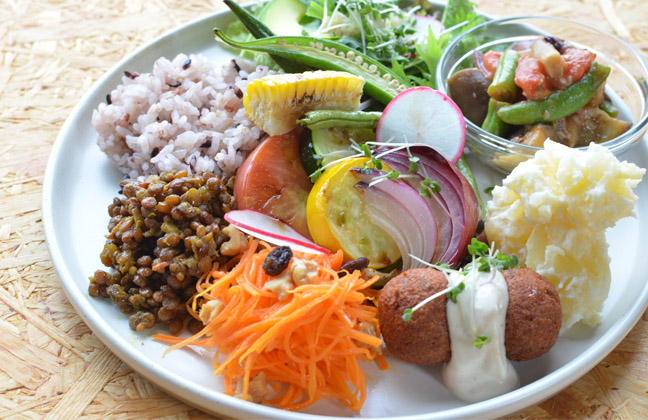
To be vegan is to eat no animal-derived foods at all — not only meat and fish, but also eggs, dairy, and honey. It is both a philosophy and a daily practice.
Source: VEGAN MANIA listing data (counted November 10, 2026).
Where the word was born — Britain, 1944
The word "vegan" was coined in Britain in 1944, when Donald Watson and others founded The Vegan Society, taking the first three and last two letters of "vegetarian."
The Society today defines veganism as a philosophy and way of living which seeks to exclude — as far as is possible and practicable — all forms of exploitation of, and cruelty to, animals for food, clothing, or any other purpose. It reaches beyond food, to daily life as a whole.
How it differs from vegetarian
"Vegetarian" is the umbrella term for people who do not eat meat or fish, and its practice varies: lacto-ovo vegetarians eat eggs and dairy, lacto vegetarians keep dairy only, ovo vegetarians keep eggs only.
Vegans are the position within that spectrum that takes none of them — no eggs, no dairy, no honey. Whether cheese, butter, or a rolled omelette appears on the table is the clear dividing line.
How "plant-based" differs
"Plant-based" mainly describes the nature of a dish or product: made from plant-derived ingredients.
"Vegan," by contrast, describes a person's philosophy and way of living. A "plant-based cake" speaks about the cake itself; a "vegan person" speaks about that person's choice. On restaurant menus, the two are often used almost interchangeably.
Japan had shojin cuisine long before
Shojin ryori — Japanese temple cuisine built entirely from vegetables, beans, and grains, without animal ingredients — was handed down in Zen temples for centuries before the word "vegan" existed.
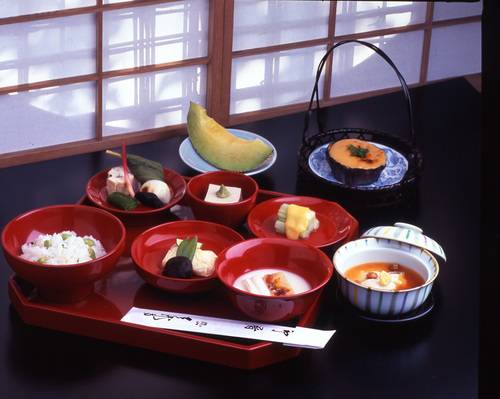
It is still a living food culture today, at restaurants such as Shigetsu, run by Tenryu-ji Temple. Shojin cooking also has its own rules that veganism does not — avoiding the five pungent roots (gokun) such as garlic and onion. The overlap is large, but they are not the same thing.
ShigetsuA shojin ryori (Buddhist vegetarian cuisine) restaurant run directly by Tenryu-ji Temple, a World Heritage site. Shojin ryori, brought from China together with Zen Buddhism in the Kamakura period, is a Zen style of cooking that uses no animal products at all and makes the most of seasonal ingredients such as vegetables, wild mountain plants, wild grasses, and seaweed. The menu offers three courses: 'Yuki' (one soup and five dishes, 3,800 yen), 'Tsuki' (one soup and six dishes, 6,500 yen), and 'Hana' (one soup and seven dishes, 9,000 yen), with seasonal flavors such as sesame tofu, fresh wheat gluten (nama-fu), and yuba arranged on vermilion-lacquered trays. The tranquil meals, enjoyed while gazing at the famous garden, have been selected as both a Bib Gourmand and a Green Star in the Michelin Guide Kyoto Osaka 2026.✓ Confirmed open in November 2026Gluten-free is a different axis
This is the pair most often confused. Gluten-free means avoiding gluten, the protein found in wheat and related grains — usually for reasons tied to health, such as wheat allergy, coeliac disease, or personal constitution.
In other words, the two axes cross, but they are different axes.
| Vegan only | No animal products (wheat may be used) |
|---|---|
| Gluten-free only | No wheat (eggs and dairy may be used) |
| Both | No animal products and no wheat |
| Neither | An ordinary dish |
Counting VEGAN MANIA's listings: fully vegan specialty restaurants number 384 nationwide, fully gluten-free restaurants 100, and restaurants that are both number 77 (counted November 10, 2026).
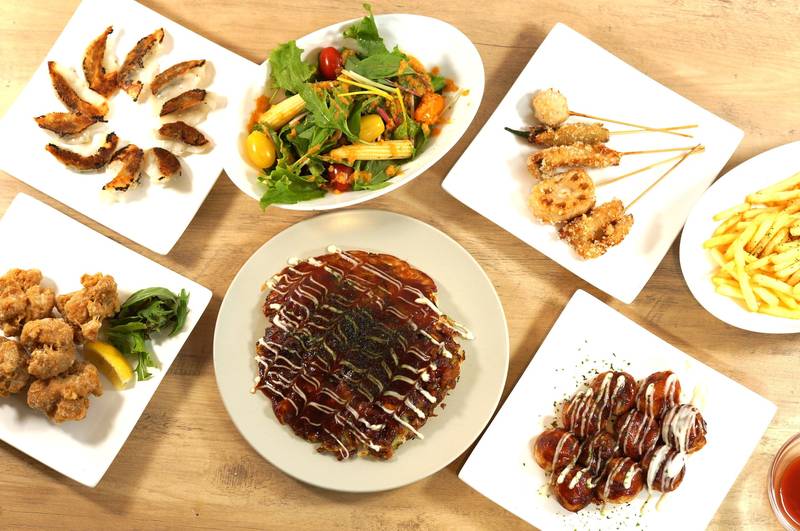 VEGAN & GLUTEN-FREE OSAKAA vegan and gluten-free specialty shop on the B1 floor of Osaka Ekimae Building No. 4, a 3-minute walk from JR Osaka Station. It recreates Osaka specialties such as okonomiyaki, takoyaki, and kushikatsu entirely plant-based and gluten-free, and also offers ramen, tantanmen, gyoza, karaage, and hand-rolled sushi. Oriental vegan options without the five pungent vegetables are also possible, and many guests with celiac disease visit. The shop's sign reads 'Second Room Cafe,' and it is also known by its former name, Second Room Cafe — a rare find in Umeda.✓ Confirmed open in November 2026
Three hiding places to check when eating out
Even a plate of "just vegetables" may contain animal-derived ingredients in its broth or seasonings. In Japan, these are the three to check:
- Dashi (broth) — bonito and sardine dashi appear throughout Japanese cooking
- Seasonings and sauces — mayonnaise (egg), oyster sauce, nam pla (fish), and more
- Sweets ingredients — gelatin (animal-derived), butter, milk, and honey
When asking a restaurant, a specific question works best: not just "do you have vegan options?" but "including the broth and seasonings, is everything free of animal-derived ingredients?"
How VEGAN MANIA counts
On this site, every listed restaurant is marked either as a fully vegan specialty restaurant, or as a restaurant with vegan options. On the map, filtering by "Vegan" leaves only the specialists, and you can combine it with "Gluten-Free."

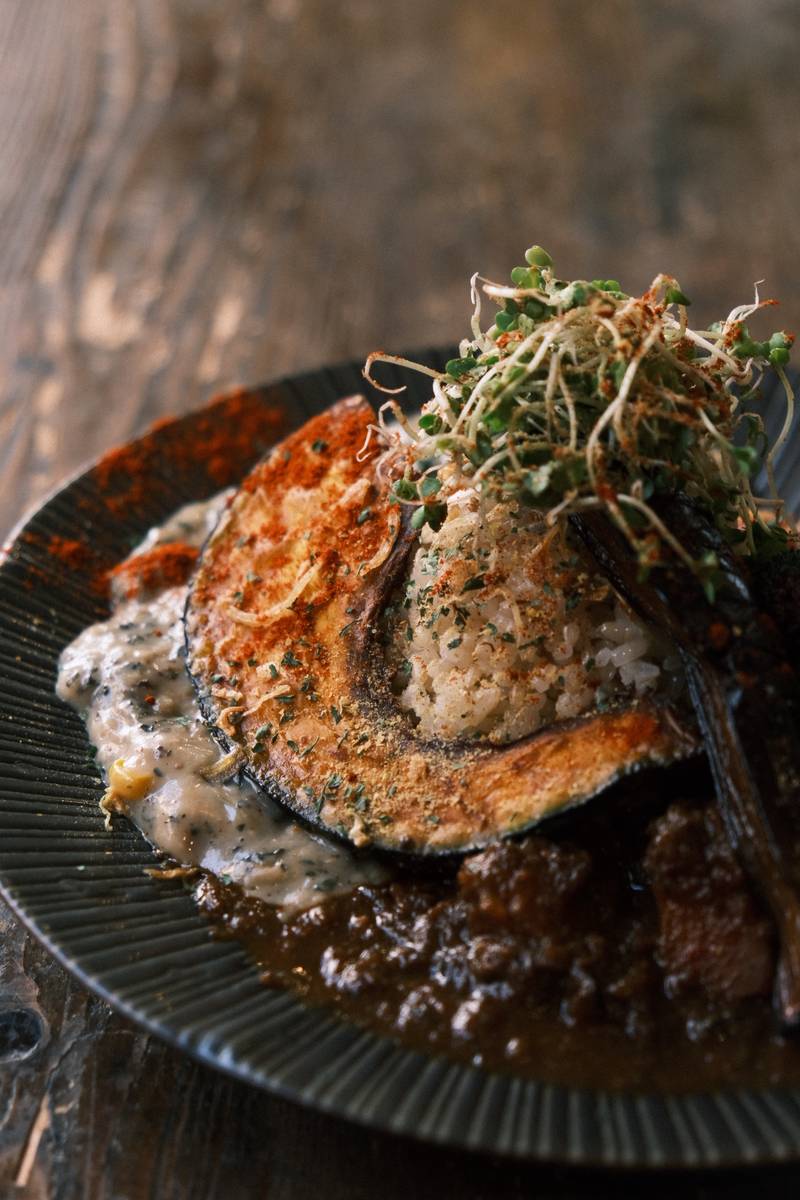 PLANT PLANETA hidden vegan restaurant tucked in a back alley near Gakugei-Daigaku, Tokyo. Known for its craft chai “MOON CHAI” — simmered for over 12 hours — an 18-spice curry, and the much-loved “phantom carrot cake.” French antiques and dried flowers fill the interior, making it feel like stepping into another world.✓ Confirmed open in November 2026
Once the words are clear, choosing a restaurant becomes a little gentler. May this be a small guide for the next table you share ‥✳︎
Sources: the definition of The Vegan Society, and VEGAN MANIA listing data (counted November 10, 2026; 5,371 restaurants nationwide).
Find a restaurant on the map
Open the mapRelated articles
 Seasonal FeaturesVegan Christmas Cakes 2026 — 7 Shops Taking Reservations Now, and Their Deadlines
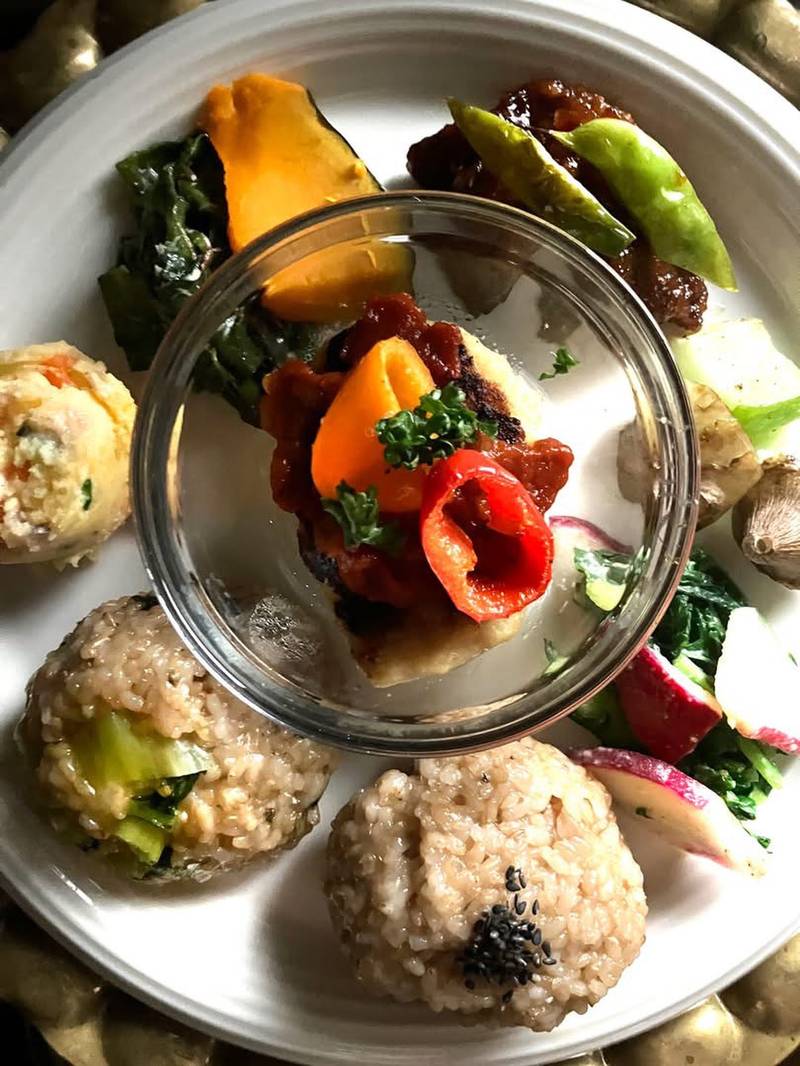 By the NumbersHow Many Vegan-Friendly Restaurants Are There in Tokyo? — We Counted Our Whole Database
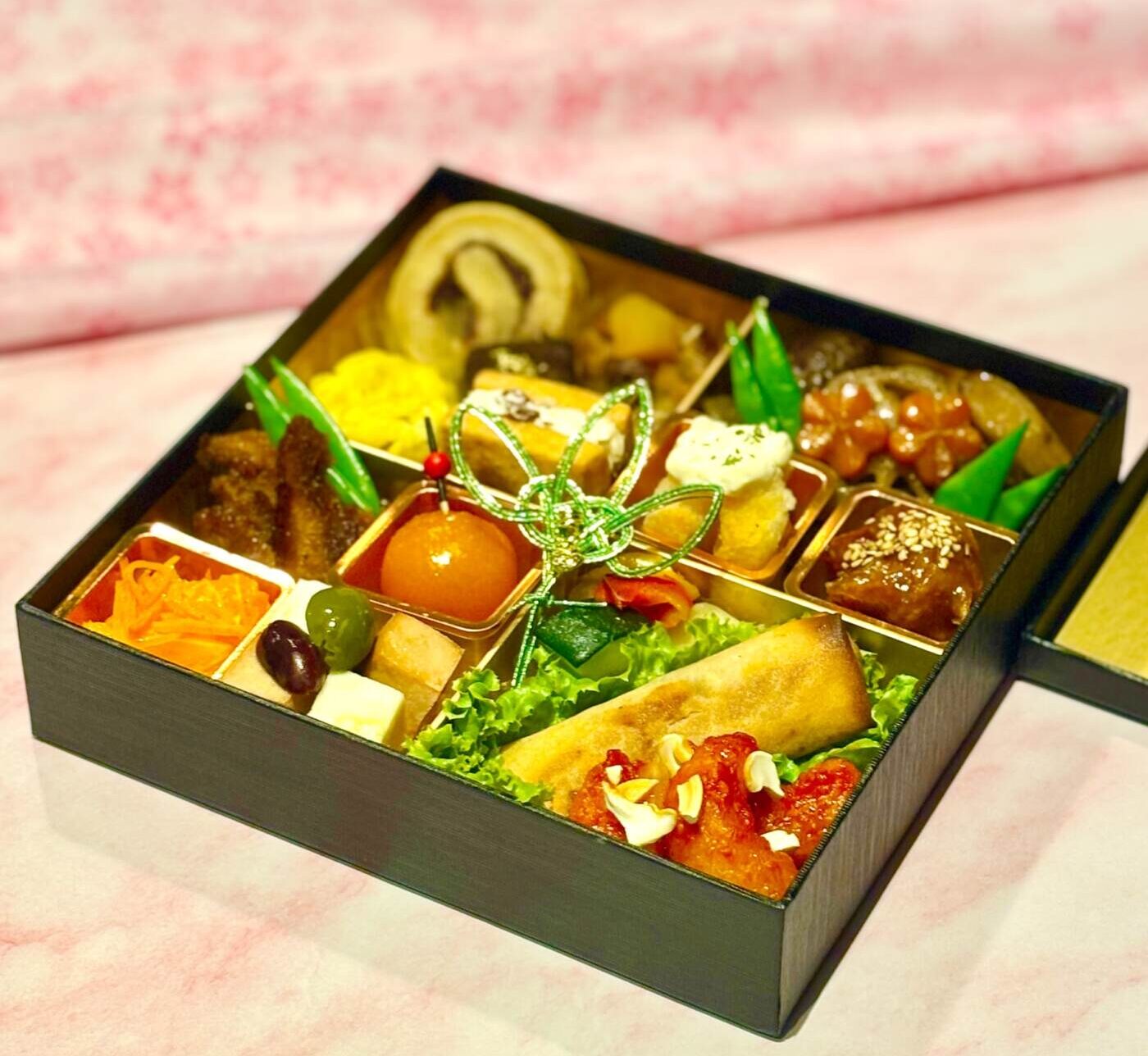 Seasonal FeaturesVegan Osechi 2027 — Six Festive Boxes Now Taking Reservations