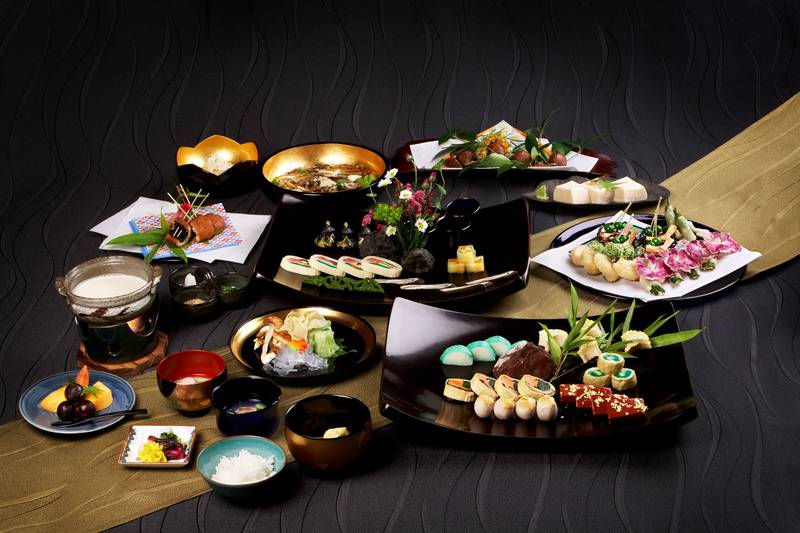

In Kyoto, where shojin temple cuisine has been handed down for centuries, our listings count 181 vegan-friendly restaurants, 48 of them fully vegan. From Tenryu-ji’s shojin trays to a cafe on the Kamo River and soy-milk ramen in Gion — six restaurants, arranged as a walk.
The figures in this article are counted from VEGAN MANIA listing data as of November 8, 2026 (5,370 restaurants nationwide). Hours, closing days, and menus may change, so please check each restaurant’s official information before visiting.
Looking for vegan food in Kyoto is, in a sense, tracing the city's own tradition.
Shojin ryori — temple cuisine built entirely from vegetables, beans, and grains, without meat or fish — has been handed down in Kyoto's Zen temples for centuries. On that foundation, a new generation of vegan restaurants is quietly taking root.
Counting VEGAN MANIA's listings, Kyoto Prefecture has 181 vegan-friendly restaurants. Of these, 158 are in Kyoto City, and 48 are fully vegan — every dish plant-based. For gluten-free, 10 restaurants are fully gluten-free, rising to 63 when restaurants with gluten-free options are included.
Source: VEGAN MANIA listing data (counted November 8, 2026; 5,370 restaurants nationwide). Please check each restaurant's page for opening hours and closing days.
Here are six restaurants that let you taste both Kyoto's heritage and its present, arranged as a walk through the city.
The shojin lineage — Arashiyama and Kuramaguchi
Shigetsu (Arashiyama) — one tray, in the quiet of Tenryu-ji
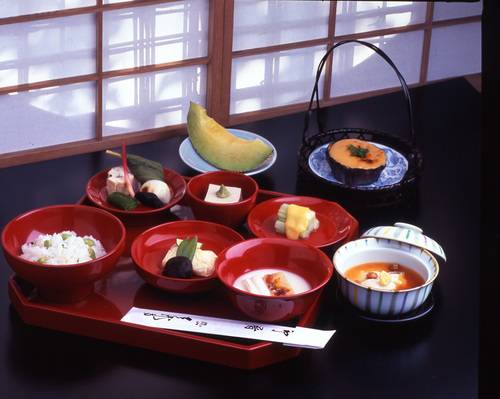
Shigetsu is the shojin restaurant run directly by Tenryu-ji, a UNESCO World Heritage temple. Shojin cooking, brought with Zen from China in the Kamakura period, uses no animal ingredients at all, drawing out the season through vegetables, wild plants, seaweed, sesame tofu, fresh wheat gluten (nama-fu), and yuba.
There are three courses — "Yuki" (one soup, five dishes), "Tsuki" (one soup, six dishes), and "Hana" (one soup, seven dishes) — served on vermilion trays facing the temple garden. The restaurant was selected as a Bib Gourmand and Green Star in the Michelin Guide Kyoto & Osaka 2026.
| Courses | "Yuki" ¥3,800 / "Tsuki" ¥6,500 / "Hana" ¥9,000 |
|---|---|
| Nearest | 5 min from Arashiyama Station (inside Tenryu-ji) |
ShigetsuA shojin ryori (Buddhist vegetarian cuisine) restaurant run directly by Tenryu-ji Temple, a World Heritage site. Shojin ryori, brought from China together with Zen Buddhism in the Kamakura period, is a Zen style of cooking that uses no animal products at all and makes the most of seasonal ingredients such as vegetables, wild mountain plants, wild grasses, and seaweed. The menu offers three courses: 'Yuki' (one soup and five dishes, 3,800 yen), 'Tsuki' (one soup and six dishes, 6,500 yen), and 'Hana' (one soup and seven dishes, 9,000 yen), with seasonal flavors such as sesame tofu, fresh wheat gluten (nama-fu), and yuba arranged on vermilion-lacquered trays. The tranquil meals, enjoyed while gazing at the famous garden, have been selected as both a Bib Gourmand and a Green Star in the Michelin Guide Kyoto Osaka 2026.✓ Confirmed open in November 2026Kangaan (Kuramaguchi) — the playful "mock" dishes of fucha ryori
A three-minute walk from Kuramaguchi Station, Kangaan serves Kyoto-style kaiseki fucha ryori inside an Obaku Zen temple founded in 1671. Fucha, a form of shojin cooking introduced from China in the early Edo period, finishes Kyoto vegetables and soy products with plant oils and kudzu starch.
Its signature is "modoki" — mock dishes modelled on eel or chestnut. Enjoy them in a private room overlooking the seasonal garden. Dining is by reservation only.
Kanga-anKyoto kaiseki fucha cuisine, served at a Zen temple of the Obaku school founded in 1671, a three-minute walk from Kuramaguchi Station. Fucha cuisine is a form of shojin (Buddhist vegetarian) cuisine introduced in the early Edo period; it uses no animal-based ingredients at all, finishing Kyoto vegetables and soy products skillfully with plant oils and kuzu starch. Its 'modoki' (imitation) dishes, such as mock eel and mock chestnut, crafted with ingenuity, are also famous, and you can enjoy them at a leisurely pace in a private room overlooking gardens that change with the seasons. The temple is also known for enshrining Reifujin, a deity connected to the onmyoji Abe no Seimei, and for having been named by the Retired Emperor Go-Mizunoo. Meals are by advance reservation only, and a dedicated parking lot is available.✓ Confirmed open in November 2026The Kamo River and downtown — Kyoto's table today
Veg Out (Shichijo) — a plate of vegetables by the river
A vegan cafe by the Kamo River in Shichijo, run by yoga studio TAMISA. Beyond the wide windows, the river and the seasons drift by.
Everything on the menu is vegan, cooked from naturally and organically grown vegetables and grains, without additives or chemical seasonings. From breakfast through lunch and cafe time, plates of seasonal Kyoto vegetables and sweets are served at an unhurried pace.
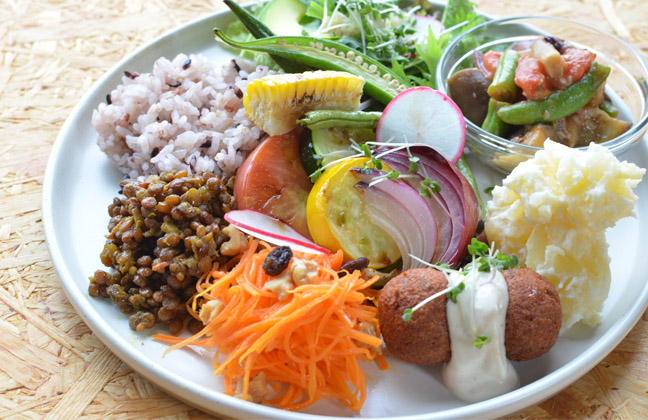
 Veg OutA vegan cafe nestled along the Kamo River in Shichijo, Kyoto. Run by yoga studio TAMISA, it lets you dine while gazing at the flow of the Kamo River and the seasonal scenery through large windows. The entire menu is vegan, with plant-based ingredients centered on naturally farmed and organically grown vegetables and grains, carefully prepared without additives or chemical seasonings. From breakfast through lunch and cafe time, you can leisurely enjoy colorful plates and sweets made with seasonal Kyoto vegetables. A place where you can find a meal that delights both heart and body.✓ Confirmed open in November 2026
mumokuteki cafe & foods (Teramachi) — the steamed-vegetable gozen
A vegan cafe on the second floor of a building in the Teramachi area. No animal ingredients are used, and neither are eggs, dairy, refined white sugar, or chemical seasonings.
The signature is the seasonal steamed-vegetable gozen, served in a bamboo steamer. There are also partly gluten-free dishes — a sesame-miso soy-milk ramen gozen and a Sichuan-style tantanmen made with rice noodles and gluten-free soy sauce — plus sweets such as a soy-milk tiramisu parfait, and a kids' menu for families.
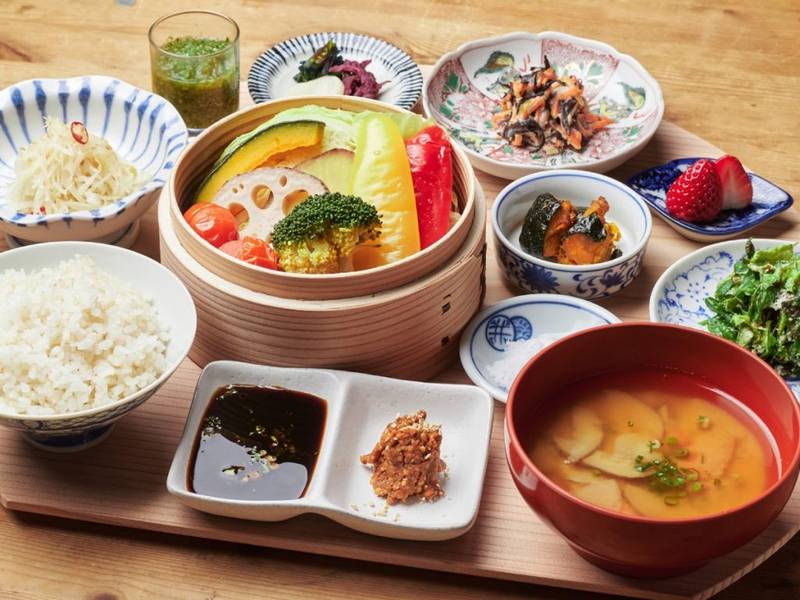 mumokuteki cafe & foodsA vegan cafe on the second floor of the Human Forum Building in the Teramachi area of Kyoto. It serves dishes and sweets made without any animal products, and also without eggs, dairy, refined white sugar, meat, fish, or chemical seasonings. Alongside the seasonal vegetable steamer-basket gozen set, some gluten-free options are available, such as the sesame miso soy milk ramen gozen made with rice flour noodles and gluten-free soy sauce, and Sichuan-style tantanmen. Sweets are plentiful too, including a soy milk tiramisu parfait, and there is a kids' menu. The shop's concept is 'a place where you can eat with peace of mind.'✓ Confirmed open in November 2026
Gion and Sanjo — noodles, and something sweet
Gion Soy Milk Ramen Uno Yukiko (Gion) — fully plant-based and gluten-free
The Gion flagship of a soy-milk ramen specialist, layering Kyoto ingredients over soy milk made from "Koka," an originally developed soybean variety. The entire menu is 100% plant-based and gluten-free, with rice-flour noodles made in the brand's own noodle factory — no eggs, dairy, meat, fish, or wheat.
Alongside the soy-milk tantanmen "Gekka," there is "Setsugetsu," which can be made without the five pungent roots, and even Jain-friendly options — a bowl that people with very different dietary needs can share at one table.
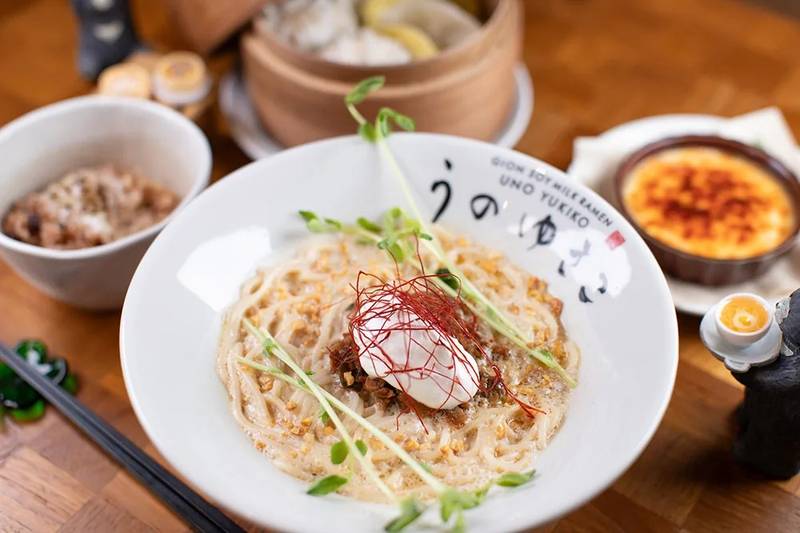 Gion Tonyu Ramen Uno YukikoThe flagship store in Gion, Kyoto. A specialty soy milk ramen shop layering soy milk made from its own developed soybean variety 'Koojun' with Kyoto ingredients; the entire menu is 100% plant-based and gluten-free. Using no eggs, dairy, meat, fish, or wheat, its noodles are rice flour noodles made at its own dedicated gluten-free noodle factory. With items such as the soy milk tantanmen 'Gekka,' the 'Setsugetsu' that can be made without the five pungent roots, and even Jain-compatible menu items, it offers bowls that let everyone share the same table beyond dietary restrictions — best enjoyed in a dining room that blends into the streetscape of Gion. Stores of the same brand have also spread to Sanjo, Kyoto Station, and Umekoji.✓ Confirmed open in November 2026
Premarché Gelateria (Kyoto Sanjo) — more than 40 flavours to choose from
A gelateria in the Sanjo shopping arcade, run by Prema, a long-standing natural-foods company. Without synthetic additives or white sugar, it lines up more than 40 flavours at any time, including dairy-free "non-milk" and fully vegan options.
Its concept is to step beyond the "food barriers" created by religion, culture, allergies, and health. This autumn brought four limited flavours — roasted sweet potato, purple sweet potato, pumpkin, and Mont Blanc (official announcement, September 2026). Each flavour is labelled with its ingredients, so you can choose according to your needs.

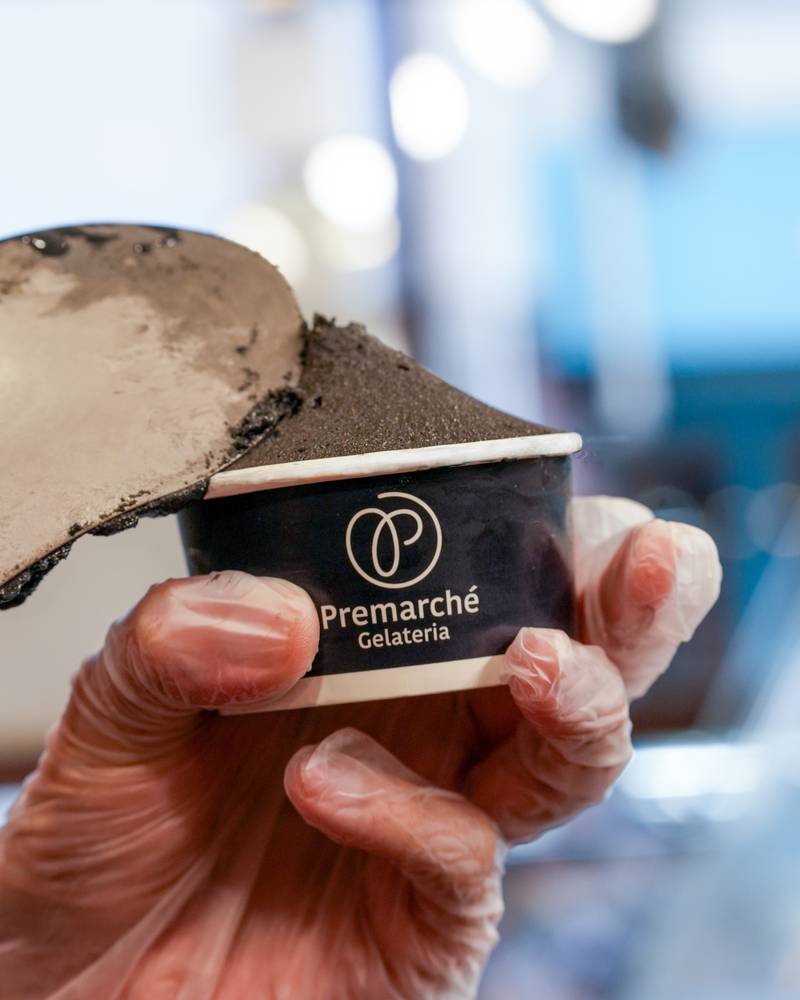 Premarché GelateriaWe want gelato and sweets to be not mere confections, but medicine for the heart.✓ Confirmed open in November 2026
Choosing by purpose
- For the essence of shojin cuisine — Shigetsu and Kangaan (Kangaan is reservation-only)
- For a slow lunch with the Kamo River — Veg Out
- For the whole family, downtown — mumokuteki cafe (kids' menu available)
- For ramen, and for gluten-free dining — Uno Yukiko (the whole menu qualifies)
- For something sweet between walks — Premarché Gelateria (vegan flavours available)
In the thousand-year capital of shojin, the lights of new restaurants keep joining the old. That landscape will, surely, keep widening little by little.
Source: VEGAN MANIA listing data (counted November 8, 2026). Restaurant descriptions are based on listing information and each restaurant's official announcements. Prices include tax.
Find a restaurant on the map
Open the mapRelated articles
 Seasonal FeaturesVegan Christmas Cakes 2026 — 7 Shops Taking Reservations Now, and Their Deadlines
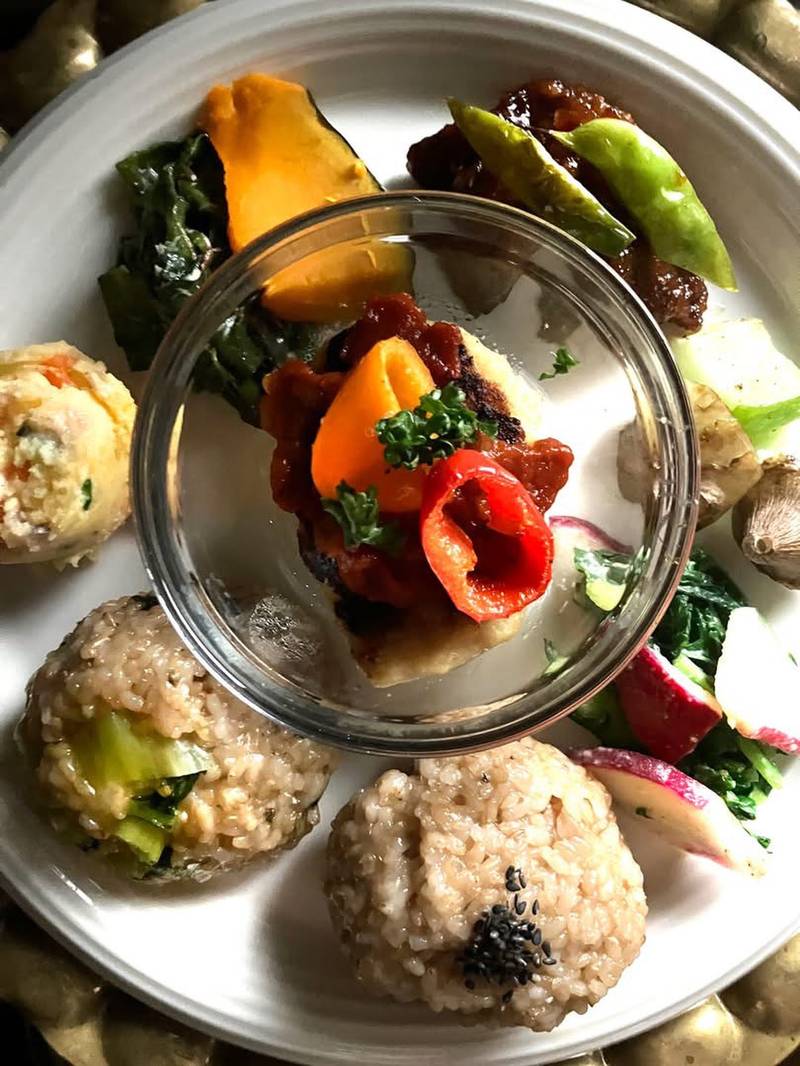 By the NumbersHow Many Vegan-Friendly Restaurants Are There in Tokyo? — We Counted Our Whole Database
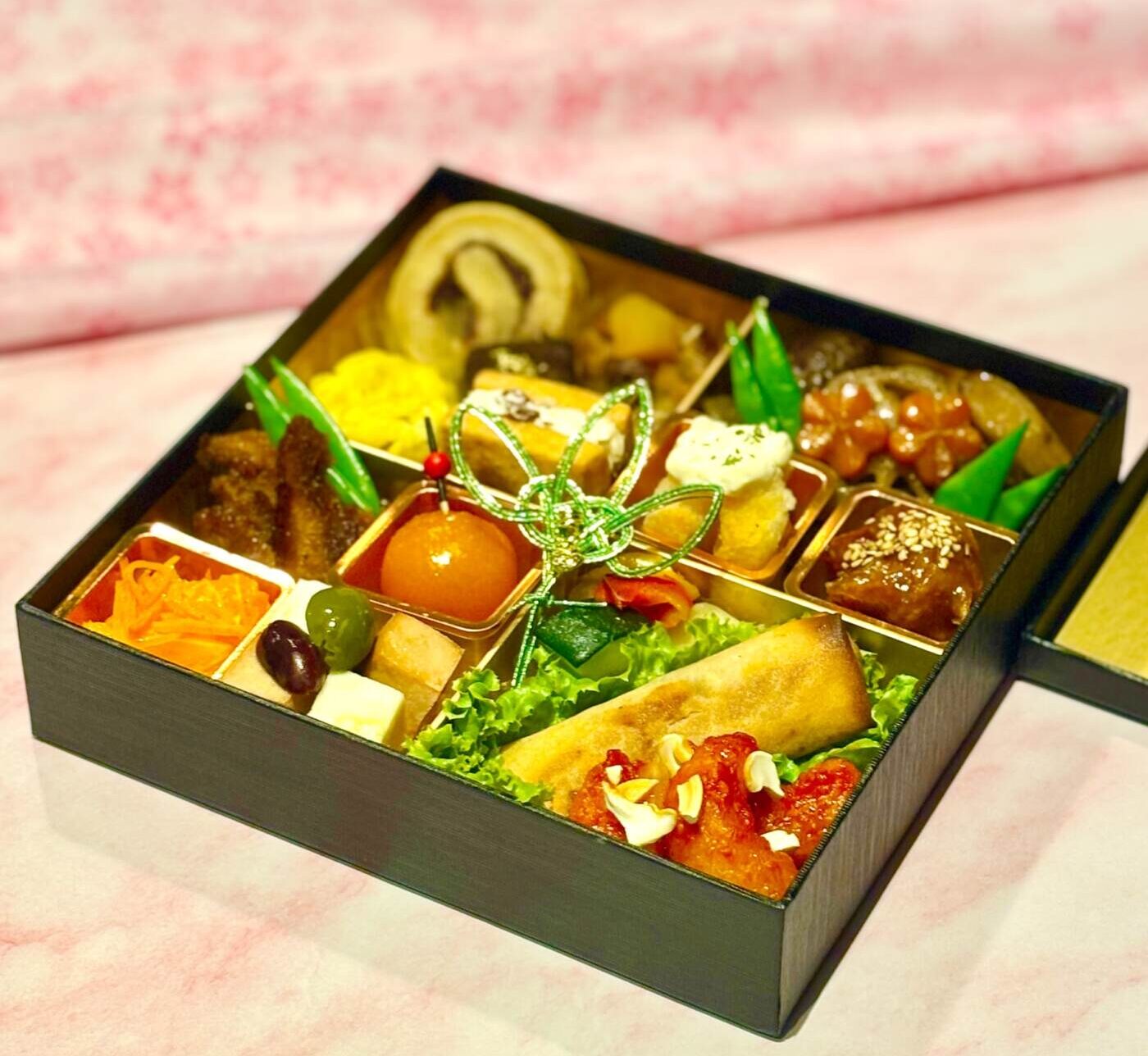 Seasonal FeaturesVegan Osechi 2027 — Six Festive Boxes Now Taking Reservations